Jean-Honoré Fragonard
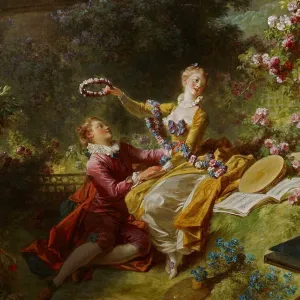
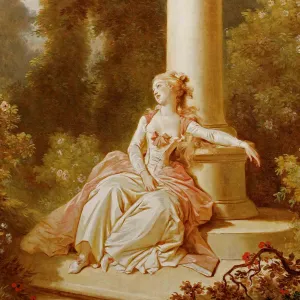
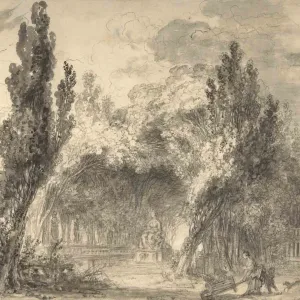
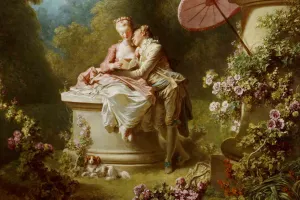
Born in Grasse, Fragonard was a child when his family moved to Paris. He studied briefly with Jean-Siméon Chardin and, aged fifteen, entered the atelier of François Boucher. In 1752, he won the Prix de Rome, which allowed him to spend the years 1756 to 1761 studying classical antiquities and Renaissance art in Italy. Fragonard made his debut at the Salon, in 1765, with a grand mythological painting, garnering critical acclaim and an invitation to join the Académie Royale de Peinture et de Sculpture. Though he demonstrated ability as a history painter, he devoted his career to working on smaller-scale paintings of less magniloquent subject matter commissioned by members of the French court . He was criticized for abandoning academic painting to produce frivolous art for the market. At the onset of the French Revolution in 1789, his style fell out of fashion for its association with the ancien régime, and Fragonard took exile in Grasse. He returned to Paris in 1793 and held administrative roles at the Musée Central des Arts (today the Musée du Louvre). He died a few years later in relative obscurity.

Listen

Past Exhibitions