

Reading List: Porcelain
November 17, 2025
By Lorenzo De Los Angeles III, Reference Assistant, Frick Art Research Library

Decorative objects made of porcelain have a significant presence at The Frick Collection. Henry Clay Frick acquired hundreds of fine examples made in China, France, Austria, and Germany from the sixteenth through the nineteenth centuries—representing the intercultural history of this fascinating medium. Subsequent acquisitions over the years have augmented the museum’s porcelain and ceramics holdings, which can be found throughout the galleries, with notable groupings in the Portico Gallery, Fragonard Room, Boucher Anteroom, Boucher Room, Du Paquier Passage, and Ceramics Room.
Believed to have been first made in China, true porcelain is made of kaolin (a soft white clay) mixed with various powdered minerals, which is sculpted and then fired at very high temperatures. The beauty of its translucence and shell-like surface—plus the initial mystery of its composition for Europeans—made it a highly prized commodity and inspired fierce competition to discover its secrets. Global trade for porcelain objects was established between Asia and Europe to meet this demand, resulting in a lively interchange of cultures.
Today, porcelain remains attractive as a medium for artistic expression. Bridging the past with the present, in recent years contemporary artists Arlene Shechet, Edmund de Waal, Giuseppe Penone, and Vladimir Kanevsky have exhibited their celebrated work in this material at the Frick, in dialogue with the museum’s historic porcelain objects.
Discover the richness of this subject through the selection of books from the Frick Art Research Library below. These books will be on display this month in our reading room, which is open Monday through Friday, 10:30 a.m. to 5:30 p.m.
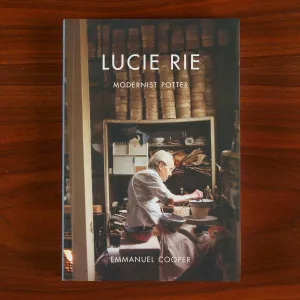
1. Lucie Rie: Modernist Potter
By Emmanuel Cooper (2021)
Explore this fascinating biography of potter Lucie Rie (1902–1995), who over the course of sixty years developed a revered body of work in porcelain and other types of clay, involving experimental applications of decoration and novel construction techniques. Rie, who was born in Austria to a Jewish family, fled her home country during World War II, eventually settling and prospering in Britain. To bring Rie’s story to life, this volume draws from the artist’s personal archives in addition to the author’s interviews with her friends and acquaintances.
2. Maiolica in Renaissance Venice: Ceramics and Luxury at the Crossroads
By Karine Tsoumis (2021)
This richly illustrated volume studies the local origins and artistic evolution of maiolica—a type of tin-glazed earthenware with roots in Italy and Spain. The author considers the medium’s varying forms, patterns, and decorations, in addition to how it became aligned with its porcelain counterparts, as maiolica was often used to mimic the appearance of much-desired porcelain objects imported from Asia during the late medieval and early Renaissance periods. An overview of the vibrant culture of Venice and its trading practices during this time also provides informative context to this rich history.

3. Toshiko Takaezu: Worlds Within
Edited by Glenn Adamson, Dakin Hart, and Kate Wiener (2024)
Dive into the work of Toshiko Takaezu (1922–2011), a ceramic and textile artist and educator whose work is held in many public and private collections. Takaezu was very innovative in her approach to working in porcelain and earthenware, characterized by experimental glazes, mixed-media installations, and monumental architectural scales. The publication also explores the artist’s visual vocabulary and sensibility, which were informed by her upbringing in Hawaii by parents of Japanese descent.

4. Meissen Snuff Boxes of the Eighteenth Century
Edited by Gerhard Röbbig (2013)
The Meissen manufactory, based in Germany, was a leading producer of porcelain beginning in the eighteenth century and is credited as the first European workshop to create works of true porcelain. Among the array of items produced there during this era were snuffboxes, pocket-sized objects featuring intricate decorations that were coveted by wealthy patrons. Examine the variety of shapes and opulent designs of these small lidded containers that held snuff, or powdered tobacco, along with the history of this once fashionable form of recreation.

5. Contemporary Black American Ceramic Artists
By Donald A. Clark and Chotsani Elaine Dean (2022)
Explore the art of thirty-eight Black American ceramic artists working today in this beautifully illustrated volume by Donald A. Clark and Chotsani Elaine Dean, prominent scholars who document and collect the art form. Based throughout the United States, each artist is given their own chapter to highlight the process and inspirations that motivate their work, in porcelain and other clays.

6. Porcelain Pugs: A Passion
Edited by Claire Dumortier and Patrick Habets (2019)
Porcelain Pugs: A Passion reveals how the popularity of pugs as pets among the noble classes in Europe around the sixteenth century translated to canines serving as subjects for decorative, luxury, and utilitarian objects in porcelain, such as flasks, candlesticks, and miniature sculptures. An assortment of examples made in factories in Germany, Austria, Belgium, England, and France depicts the charm and affection for this breed of dog—a romance that endures to this day.

7. Chinese and Japanese Porcelain for the Dutch Golden Age
Edited by Jan van Campen and Titus M. Eliëns (2014)
During the sixteenth century, Dutch Delftware, also known as Delft Blue or Delft pottery, took inspiration through form and surface decoration from porcelain imported from China and Japan. In this collaborative research project, involving four major Dutch museums, discover essays with rich illustrations that together paint a vivid history of these now iconic ceramic works.

8. Porcelain Garden: Vladimir Kanevsky at The Frick Collection
By Xavier F. Salomon (2025)
The Ukrainian-born artist Vladamir Kanevsky is renowned for his amazingly lifelike recreations in porcelain of flowering plants and fruit. His installation at The Frick Collection, which closed on November 17, 2025, celebrated the museum’s newly reopened galleries. Dazzling to the eye, Kanevsky’s illusionistic works complemented the surrounding permanent collection objects in intimate and engaging ways, while echoing the floral arrangements that graced the museum when it first opened to the public, in 1935. Porcelain Garden reveals how this commission came to be and explores the working methods, inspirations, and biography of this accomplished sculptor.

All photos by Joseph Coscia Jr., The Frick Collection