

Reading List: Staff Picks by Elizabeth Kobert
October 15, 2025
By Elizabeth Kobert, Archivist

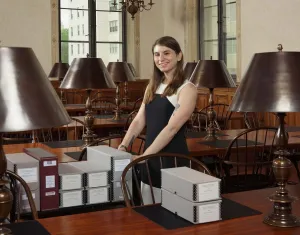
Hello! My name is Elizabeth Kobert and I am an Archivist at The Frick Collection and Frick Art Research Library. You may not know it, but The Frick Collection Archives contains thousands of linear feet of rich materials related to the history both of the Frick and of art history and collecting at large. I mostly work on organizing and providing access to our vast and growing collection of institutional records (which document the history of the museum and library) and manuscript collections (which document other individuals, families, and businesses with some connection to art collecting or scholarship).
My favorite part of the job is assisting researchers working on provenance, or the history of ownership of art objects. This usually involves checking sales and inventory volumes, correspondence files, and photographic records—it often feels like solving a puzzle or mystery.
Outside of work, I like to visit other museums, play bar trivia, and take yoga classes. I also serve as the Director of Publications for the Archivists Round Table of Metropolitan New York, where I oversee our biannual online magazine, the Metropolitan Archivist. You can learn more about me in a Rapid-Fire Q&A below.
Below are some of my favorite books available at the Frick Art Research Library. You can explore these titles in our reading room, and I invite you to learn how you can visit and consult materials from the Archives in person!
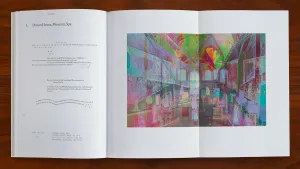
1. The Arcades: Contemporary Art and Walter Benjamin
Edited by Jens Hoffmann (2017)
This exhibition at the Jewish Museum is one of my favorites I’ve ever seen in New York, and the catalogue captures the creativity and uniqueness of the show. Contemporary artists were invited to respond to sections, or “convolutes,” from the unfinished exploration of modernity by philosopher and critic Walter Benjamin: the Passagenwerk, or Arcades Project. Despite being about Paris in the early twentieth century, the exhibition demonstrates how these convolutes are still relevant to artists and flâneurs today.
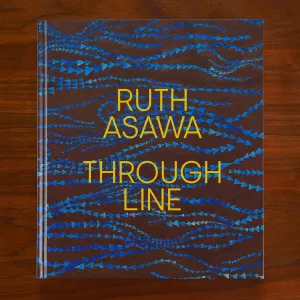
2. Ruth Asawa: Through Line
Edited by Kim Conaty and Édouard Kopp (2023)
While she’s better known for her wire sculptures, Ruth Asawa’s drawings allowed her to experiment more with color as well as form. I liked that this exhibition, shown at the Whitney Museum of American Art, used an expansive definition of “works on paper” to include Asawa’s brilliant sculptures made of folded paper. Like my colleague Joey Vincennie, the Whitney was the first museum I worked at in New York City, and I’m always impressed by their exhibitions, especially their often overdue surveys of women artists.
3. The Golden Book of Portuguese Tinned Fish
By José Leitão de Barros (1938)
This beautifully illustrated book documents the history of one of my favorite sources of protein. It traces the sardine industry from the early days of Portuguese fishermen to twentieth-century canning practices, as well as highlighting artistic representations of “sea life.”

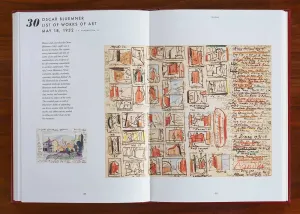
4. Lists: To-dos, Illustrated Inventories, Collected Thoughts, and Other Artists’ Enumerations from the Smithsonian’s Archives of American Art
By Liza Kirwin (2010)
I love seeing archival material presented in exhibitions, and I found this show to be an especially clever way to show off a variety of documents created by artists. The category of “list” is just specific enough to impose a boundary, but broad enough to include a wide range of handwritten, typed, illustrated, and annotated materials that offer insight into the artistic life and process.
5. Matisse in the Barnes Foundation
Edited by Yve-Alain Bois (2015)
I’m embarrassed to say that I never visited the Barnes Foundation when I was an undergraduate at the University of Pennsylvania, but I’ve made up for lost time on my visits to Philadelphia since then! Dr. Albert C. Barnes was a wealthy and eccentric collector who turned his house into a museum, not so unlike Henry Clay Frick, but his collaborative relationship with artist Henri Matisse evinces a very different type of collecting. The foldout views of Barnes’s galleries in this book give a sense of his idiosyncratic approach to displaying art—but it should really be experienced in person.
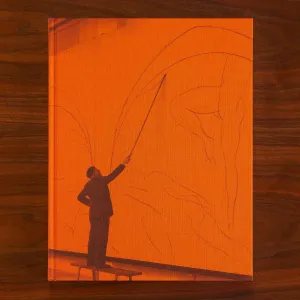
6. Agnes Martin: Paintings, Writings, Remembrances
By Arne Glimcher (2012)
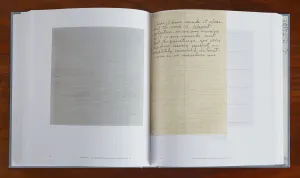
My favorite part of this catalogue focused on the abstract painter Agnes Martin is the photocopies of handwritten notes and letters inserted among the reproductions of paintings. While I think the minimalist grids speak for themselves, these texts add another rich layer of meaning, revealing Martin’s meditations and motivations in her own hand.
7. Georgia O’Keeffe: Living Modern
By Wanda M. Corn (2017)
I saw this exhibition at the Brooklyn Museum and have never forgotten it. This catalogue is a great memory of that experience. I was so inspired by Georgia O’Keeffe’s style and way of life that I even got a tattoo of her iconic “OK” brooch, designed by Alexander Calder!
8. Alma Thomas
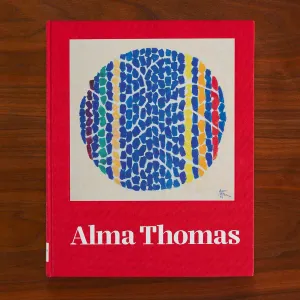
Edited by Ian Berry and Lauren Haynes (2016)
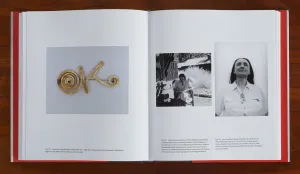
Every time I stand in front of an Alma Thomas painting, I feel a sense of serene joy. Her mastery of color theory and distinctive abstract style are perfectly captured in this catalogue, while the selection of photographs and other archival materials reveal more about her artistic practice and myriad accomplishments.
Rapid-Fire Q&A with Elizabeth
Fiction or nonfiction?
Fiction
Print or e-books?
Reading or audiobooks?
Reading
Iced or hot drinks?
Iced
Favorite season?
Fall
Favorite library or archive (besides the Frick)?
Fisher Fine Arts Library at UPenn
Favorite depiction of your job in media?
Julio Torres in Problemista (which I wrote an article about for the Metropolitan Archivist!)
Most interesting question you’ve received in your job?
All the provenance questions about material in the Rosenberg and Stiebel Archive—I’ve answered over 300!
(Learn more about the Frick’s acquisition of this significant archive.)
Advice for hopeful future archivists?
Get as much experience as possible! Internships, part-time jobs, and volunteering are all super important to starting your career. Also, reach out to others in the field—most of us love talking about our jobs and how we got into archives!
All photos by Joseph Coscia Jr., The Frick Collection