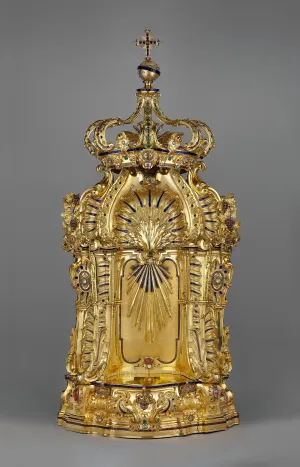
This groundbreaking exhibition presented more than forty rare objects from the Church of the Holy Sepulcher. These treasures were donated by European Catholic monarchs and Holy Roman Emperors in the seventeenth and eighteenth centuries to the church in Jerusalem, the religious center of the Christian faith, and have been safeguarded and used ever since by the Franciscan friars who maintain the site.
Taking inspiration from the French Rococo, Italian Baroque, and Abstract Expressionist movements, Flora Yukhnovich (b. England, 1990) creates work that is at once modern and timeless by translating historic compositions into contemporary abstractions. Using the Frick’s Four Seasons by François Boucher as a point of departure, Yukhnovich's site-specific mural covers the walls of the museum's Cabinet.
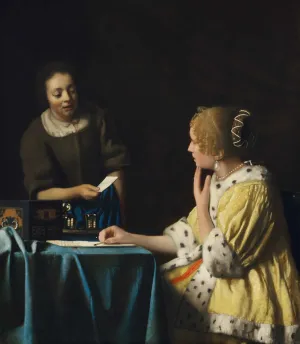
The unprecedented installation of paintings united in the exhibition Vermeer’s Love Letters pairs the Frick’s Mistress and Maid with special loans of the Rijksmuseum’s Love Letter and the National Gallery of Ireland’s Woman Writing a Letter with Her Maid. Their presentation together in a single gallery for the first time offers visitors an opportunity to consider Vermeer’s treatment of the theme of letters as well as his depiction of women of different social classes.
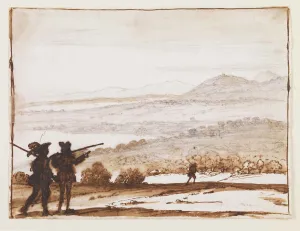
A display of works on paper from the Frick's permanent collection inaugurated the new Cabinet gallery. These sheets are rarely on view due to their sensitivity to light. The selection of twelve works range from sketches to highly finished independent works of art by artists such as Pisanello, Rubens, Goya, and Degas, spanning the fifteenth through nineteenth centuries and complementing the museum's holdings of paintings, sculpture, and decorative arts.
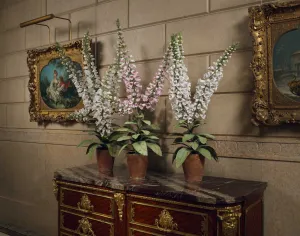
Coinciding with the reopening of its newly renovated and enhanced home on Fifth Avenue, The Frick Collection presented a series of commissioned works by sculptor Vladimir Kanevsky (born 1951, Ukraine). Known for his life-like porcelain flowers, Kanevsky's sculptures have been exhibited in museums around the world, including the State Hermitage Museum, St. Petersburg, and Hillwood Estate, Museum and Gardens in Washington, D.C.
Bellini’s St. Francis in the Desert and Giorgione’s Three Philosophers were once displayed in the same Venetian palazzo—the house of the Renaissance collector Taddeo Contarini. This exhibition brings them together for the first time in centuries, providing an unprecedented opportunity for audiences to see them in dialogue.
This presentation celebrates the remarkable figurative work of Barkley L. Hendricks (1945–2017) through a focused selection of portraiture drawn from private and public collections. This pioneering American artist, who counted the Frick among his favorite museums, continues to inspire artists and designers today.
The Frick Collection presents a site-specific installation by the Swiss-born artist Nicolas Party (b. 1980) that combines Rosalba Carriera’s Portrait of a Man in Pilgrim’s Costume with an ensemble of pastel works of Party’s own devising.
A remarkable gift of fine and decorative works of art was bequeathed to the Frick by Alexis Gregory (1936–2020) and was shown as a group for the first time in this exhibition. The eclectic assemblage includes pastels, enamels, clocks, and objects made of metal, enamel, and hardstone.