

Ruffles & Ribbons: Fashion Plates from the Time of Marie Antoinette
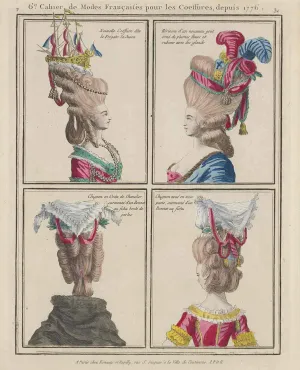
New York (March 2, 2026) — Starting April 1, The Frick Collection will present Ruffles & Ribbons: Fashion Plates from the Time of Marie Antoinette in the Cabinet Gallery, displaying twenty-four hand-colored engravings, known as fashion plates, depicting French dress in the late eighteenth century. This marks the Frick’s first gallery presentation drawn entirely from the Frick Art Research Library’s holdings.
Organized by Yifu Liu, the Frick’s 2024–26 Anne L. Poulet Curatorial Fellow, in conjunction with the special exhibition Gainsborough: The Fashion of Portraiture, the installation showcases a selection of captivating prints from the Frick Art Research Library’s set of Gallerie des modes et costumes français (1778–87), the largest and most influential fashion plate series of its time. The plates offer rare insights into the world of clothing and accessories during the reign of Louis XVI and Marie Antoinette. French designs as captured in the prints were circulated across Europe and its colonies, setting the latest styles, like those seen in Thomas Gainsborough’s contemporaneous portraits of British society figures.
Created by talented designers and engravers in Paris, Gallerie des modes was a pioneering precursor to modern fashion magazines. Visitors will discover detailed representations of diverse ensembles, from fanciful headdresses to voluminous gowns, reflecting the tastes of an increasingly fashion-conscious public. While no complete set of Gallerie des modes survives today—many were discarded when fashions changed, and others may have been destroyed during the French Revolution due to their ties to the ancien régime—the Frick Art Research Library houses an exceptional collection of 370 original prints, a gift of Melinda Martin Sullivan in 2016. Many other extant sets of the plates are bound, unlike the library’s loose-leaf set, making this display a rare opportunity for visitors to discover an array of these prints in a museum setting.
Commented Axel Rüger, Anna-Maria and Stephen Kellen Director of The Frick Collection, “This project reflects exceptional scholarship and collaboration, marking the first time works from the Frick Art Research Library will be shown in a dedicated exhibition in the museum’s galleries. We commend Yifu Liu, Anne L. Poulet Curatorial Fellow, whose thoughtful selection and research illuminate the broader cultural significance behind these extraordinary plates. We are also grateful to Aimee Ng, Peter Jay Sharp Chief Curator, for conceiving and guiding the exhibition and publication, and to Stephen J. Bury, former Andrew W. Mellon Chief Librarian of the Frick Art Research Library, under whose stewardship the Gallerie des modes set was acquired.”
Remarked Liu, “Working on Ruffles & Ribbons has been a deeply rewarding experience, not least for its dialogues with the Frick’s concurrent exhibition Gainsborough: The Fashion of Portraiture. Together, the two presentations highlight how closely intertwined French and British culture and fashions were during the late eighteenth century. Ruffles & Ribbons brings to life the rapid expansion of the French fashion industry, revealing how global trade, colonial expansion, and cross-cultural exchange ignited a wave of creativity that established Paris as the fashion capital of Europe. The plates in the show also draw attention to the influence of printed fashion media on contemporaneous paintings, and vice versa.”
Ruffles & Ribbons: Fashion Plates from the Time of Marie Antoinette showcases a selection of works from a gift by Melinda Martin Sullivan. This exhibition is made possible by The Gilbert & Ildiko Butler Family Foundation, Inc.; Michael and Jane Horvitz; The Helen Clay Frick Foundation; the Mellon Foundation; Brook and Melissa Dane; and The Eden Arts Foundation.
PUBLIC PROGRAMMING
The installation will be complemented by a rich array of public programs, from a free lecture by Yifu Liu to a symposium featuring leading art historians and curators on the interwoven relationship between fashion and art in early modern European paintings and prints. Additional offerings from the Frick Art Research Library will include a reading list and a research guide on fashion and art. Full programming details, including a virtual Spring Book Club related to the exhibition, will be shared at frick.org/programs.
As spring turns to summer, florals and plants inspired by fashion details found in Ruffles & Ribbons will be installed in the Frick’s Fifth Avenue Garden, designed by Maeve Turner, Head of Gardens and Horticulture. For a full list of plantings, visit our website.
ACCOMPANYING PUBLICATION
An exhibition catalogue authored by Liu will be available for purchase. The beautifully illustrated publication features detailed images, caption translations, and accompanying descriptions for all twenty-four fashion plates in the show. Liu’s commentary provides historical context for the publication of Gallerie des modes and offers insights into each print, exploring their representation of various figures, fashions, and facets of French culture in the late eighteenth century.
The hardcover catalogue is published by The Frick Collection and funded in part by The Eden Arts Foundation ($40; members 20% off in-store, 10% online). It will be available for purchase in the Frick’s Museum Shop, online at shop.frick.org, or by contacting shop@frick.org or 212.547.6849.
ABOUT THE FRICK COLLECTION
Housed in one of New York City’s last great Gilded Age homes, The Frick Collection provides intimate encounters with one of the world’s foremost collections of fine and decorative arts. Open since 1935, the institution originated with Henry Clay Frick, who bequeathed his Fifth Avenue residence and collection of European paintings, sculpture, and decorative arts for the enjoyment of the public. The museum’s holdings, which encompass masterworks from the Renaissance to the late nineteenth century, have grown over the decades, more than doubling in number since the opening of the museum. The Frick Art Research Library, founded more than one hundred years ago by Henry Clay Frick’s daughter Helen Clay Frick, is today a leading art history research center that serves students, scholars, and the public.
Last spring, the Frick completed a major renovation and enhancement project and reopened on April 17, 2025, with great fanfare. Designed by Selldorf Architects, with executive architect Beyer Blinder Belle, the project was developed to honor the historic legacy and character of the Frick while addressing critical infrastructural and operational needs.
For more information, please visit frick.org.