

Audio Introduction
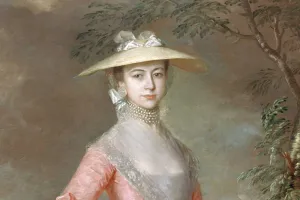
Introduction: Fashion and Portaiture
Audio Introduction
Transcript
Speaker: Aimee Ng
Welcome to the audio guide for the special exhibition Gainsborough: The Fashion of Portraiture. I’m Aimee Ng, Peter Jay Sharp Chief Curator at the Frick, and it is my pleasure to guide you through the show.
Thomas Gainsborough was one of the leading artists of eighteenth-century Britain—which is sometimes referred to as “Georgian” Britain after the four King Georges who ruled from 1714 through 1830. For thousands of years, artists have made portraits to record the appearance of the people around them, and in Georgian Britain, portraits did that and much more. Among other things, they shaped and invented identities, declared social rank, represented alliances, asserted power, and conveyed political views. People traded portraits with each other and gave them as gifts; they displayed them at public exhibitions; and critics wrote about portraits in daily newspapers. Portraits were the most popular form of painting in Gainsborough’s time. Gainsborough, who grew up in the countryside, loved making landscape paintings, but it was portraiture that paid his bills. The twenty-five paintings in this exhibition, which represent some of the highest achievements of Gainsborough’s nearly fifty-year career, are selected from about seven hundred extant portraits by the artist.
This exhibition explores the place of portraits in Gainsborough’s world and their relationship to fashion, which touched nearly every level of British society. What you wore in a portrait, how you were painted, and by whom, could go in and out of style just as clothing did. The trappings and trade of fashion filled Gainsborough’s world—in magazines and tailor shops, at the opera and on promenades—and his portraits were at the heart of it. As a concept, fashion was understood a little differently in Gainsborough’s time. Beyond how people dressed, fashion was also associated with time, making and manufacture, and explicitly to social class. A “person of fashion” was someone who held a social rank below the nobility and above the “vulgar.” One of the most fashionable painters of his day, Gainsborough explored the power of portraiture to shape his sitters’ identities, to show off his signature painting style, and, sometimes, to subvert the rules of British social class.