
Of the many artists who flourished in Rome during the eighteenth century, the silversmith Luigi Valadier (1726–1785) was particularly admired by popes, royalty, and aristocrats across Europe. Luigi Valadier: Splendor in Eighteenth-Century Rome, curated by Alvar González-Palacios, brought together more than sixty extraordinary works by the renowned silversmith in celebration of his unsurpassed technical expertise and avant-garde aesthetic.
From about 1515 until his death, Andrea del Sarto (1486–1530) ran the most successful and productive workshop in Florence, not only leaving his native city richly decorated with his art but also greatly influencing the art produced in the remainder of the century. By 1700, however, Andrea’s reputation had declined, not to be revived until the publication of monographs by Sydney Freedberg and John Shearman in 1963 and 1965, respectively.
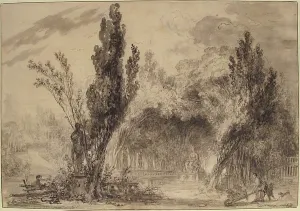
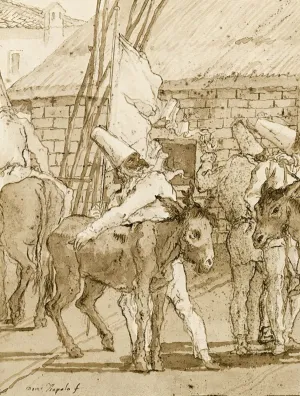
The Frick Collection presented an exhibition entitled "Fragonard Drawings in North American Collections," previously shown at the National Gallery of Art, Washington, and at the Fogg Art Museum, Cambridge. This important and beautiful exhibition, curated by Eunice Williams, Assistant Curator of Drawings at the Fogg Art Museum, was comprised of sixty-three drawings by Fragonard, along with a few comparative examples of work by contemporary French artists.
The Frick Collection once again presented an exhibition of William Blake's illustrations for John Bunyan's Pilgrim’s Progress. The exhibition complemented the collection of Blake's watercolors and illuminated books then on view at the Morgan Library.
An unprecedented exhibition of nearly one hundred French clocks on loan from North American collections. One of a series of loan exhibitions intended to focus attention on lesser-known aspects of the collection’s holdings, French Clocks in North American Collections was organized around the four remarkable eighteenth-century French clocks in the museum. Related examples by the craftsmen who produced these clocks form the nucleus of the exhibition, which extends its scope back to the Renaissance and forward into the early nineteenth century.
In commemoration of the 150th anniversary of the birth of the American artist James Abbott McNeill Whistler (1834–1903), The Frick Collection exhibited all of its Whistler holdings. Whistler's The Ocean (left), three pastels of Venice, twelve etchings from his famous "Venice Set," a lithograph of Robert, Comte de Montesquiou-Fezensac, and two letters written to Montesquiou and R.A. Canfield were on view in the lower-level gallery. The four full-length portraits by Whistler of Miss Rosa Corder, Mrs. Frederick R.
The Frick Collection's first show built around a single work of art was a loan exhibition devoted to Ingres's celebrated portrait of the Comtesse d'Haussonville. The exhibition documented the evolution of the portrait, from hesistant sketches to the brilliant final canvas, and the life and character of the subject, including Mme. d'Haussonville's memoirs and her will.
An exhibition focusing on the cities of Venice and Paris as depicted in paintings, drawings, and prints in The Frick Collection. The exhibition included two canvases depicting scenes of Venice by Francesco Guardi that are normally displayed in the main reading room of the Frick Art Reference Library; three pastels of Venetian subjects by J.A.M. Whistler; the twelve etchings that comprised Whistler’s First Venice Set; and thirteen etchings by Charles Meryon providing vivid images of Paris as it appeared in the mid-nineteenth century.
PLAN YOUR VISIT
Timed tickets are recommended. Members visit free, with no reservations!