

Kingdom of Naples

Gennaro De Blasio (act. 1724–40)
Antependium, 1731
Silver and gilt bronze
38 3/4 × 95 1/4 × 11 7/16 in. (98.5 × 242 × 29 cm)
Terra Sancta Museum, Jerusalem
© The Frick Collection
This antependium is made of three parts: a central relief showing the Pentecost—the moment when the Holy Spirit appeared to the Virgin Mary and the apostles after the resurrection of Christ—and two wings with the figures of St. Bonaventure (left) and St. Louis of Anjou (right) in niches. The altar frontal is signed by Gennaro De Blasio, son of the Neapolitan silversmith Andrea De Blasio and consul of the guild of silversmiths in the city in 1740. The antependium arrived in Jerusalem on June 8, 1731.
Naples
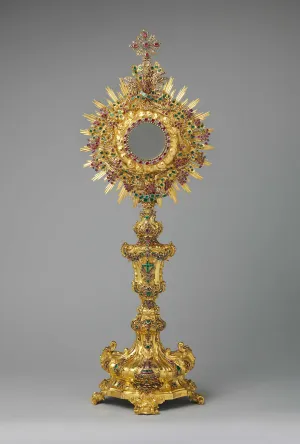
Monstrance, 1746
Gold, precious stones
27 15/16 × 10 1/4 × 7 1/16 in. (71 × 26 × 18 cm)
Terra Sancta Museum, Jerusalem
© The Frick Collection
Made of solid gold and studded with emeralds, rubies, and diamonds, this monstrance is an extraordinary survival of Neapolitan goldsmith work. As indicated from the inscription on the base, it was a gift from the Kingdom of Naples at the time of King Charles of Bourbon (r. 1734–59). It was brought to Jerusalem in January 1747.
Antonio de Laurentiis
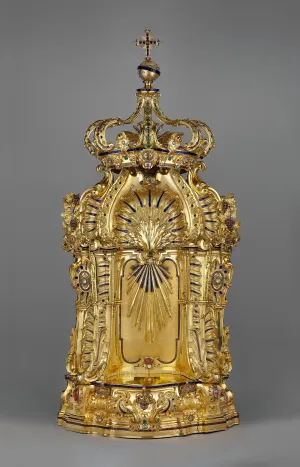
Throne of Eucharistic Exposition, 1754
Gold, gilt copper, glass, precious and semi-precious stones
68 11/16 × 32 5/16 × 15 3/8 in. (174.5 × 82 × 39 cm)
Terra Sancta Museum, Jerusalem
© The Frick Collection
Following the arrival of the Neapolitan gold monstrance in 1747, the Kingdom of Naples sent this Throne of Eucharistic Exposition to Jerusalem in October 1755. Extraordinary for its size and the value of its materials, this is the most impressive object preserved today in the Latin Treasure and one of the most important survivals of eighteenth-century European goldsmith work. The throne bears the arms of King Charles and of his wife, Queen Maria Amalia of Saxony. On the base at left, it is signed by the Neapolitan goldsmith Antonio de Laurentiis, whose name is associated primarily with objects in gold-inlaid tortoiseshell and mounted snuffboxes.
Naples
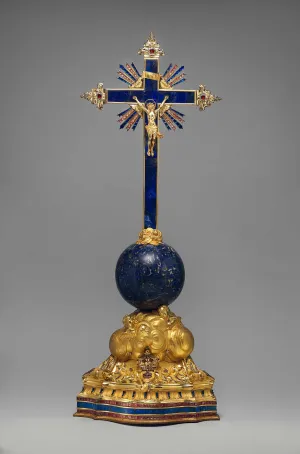
Crucifix, 1756
Gold, lapis lazuli, precious and semi-precious stones
35 7/16 × 13 7/16 × 9 1/16 in. (90 × 34.2 × 23 cm)
Terra Sancta Museum, Jerusalem
© The Frick Collection
The base of this crucifix displays a royal crown, the Jerusalem Cross, and a horse (the arms of the Commissariat of Naples). This opulent object was delivered to Jerusalem in June 1757, after the Neapolitan monstrance and Throne of Eucharistic Exposition. It was a gift from King Charles of Naples and “his most faithful subjects.” The crucifix can be placed in the niche of the Throne of Eucharistic Exposition instead of the monstrance, depending on the occasion.

Naples
Crozier, 1756
Gold, glass, precious and semi-precious stones
77 15/16 × 6 1/8 × 4 5/16 in. (198 × 15.5 × 11 cm)
Terra Sancta Museum, Jerusalem
© The Frick Collection
The Commissariat of Naples sent this glorious crozier, together with the gold and lapis lazuli crucifix, to the Holy Sepulcher in June 1757. It is meant for use by the Custos. The four statuettes represent three Franciscan saints—Francis of Assisi, Bonaventure, and Louis of Anjou—and Januarius, the patron saint of Naples. In the context of Neapolitan goldsmith work, this crozier is unparalleled by any other similar, surviving works of art.